TEHRF
-
Iodine important in pregnant mares’ diets
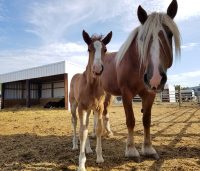
When it comes to bringing new horses into the world, mare care and particularly mare nutrition should be a top priority for horse owners — a mother’s diet during pregnancy can drastically impact the health of her foal. A multi-year study led by Dr. Claire Card at the Western College of Veterinary Medicine (WCVM) is aimed at ensuring that mares …
November 25th, 2022 Full story »
-
Vet earns PhD degree and research prize
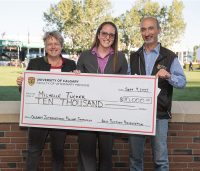
Through hard work and perseverance, equine surgical specialist Dr. Michelle Tucker has earned her PhD degree as well as a $10,000 prize for her research achievements at the Western College of Veterinary Medicine (WCVM). Tucker is one of 17 WCVM-based graduate students who will receive their Doctor of Philosophy (PhD) degrees at the University of Saskatchewan’s Fall Convocation on Nov. …
November 10th, 2022 Full story »

-
TEHRF research grants: 2022-23
Three equine health research studies, which involve scientists at the WCVM and their collaborators, received a total of $51,607 in support from TEHRF. Is Chlamydia psittaci causing equine abortions in Canada? Drs. Bruce Wobeser and Madison Ricard, WCVM WCVM researchers are investigating the prevalence of Chlamydia psittaci (C. psittaci) in aborted horse placentas. This bacterial pathogen causes psittacosis, a disease …
October 08th, 2022 Full story »

-
Fund directs dollars to projects, people
This year, the Western College of Veterinary Medicine’s Townsend Equine Health Research Fund (TEHRF) has targeted just over $100,000 to support three new equine health research projects as well as graduate scholarships and an undergraduate summer research position at the veterinary college. Projects Three equine health research studies, which involve scientists at the WCVM and their collaborators, received a total …
October 08th, 2022 Full story »

-
How to manage hoof abscesses
Every equine veterinarian is familiar with this kind of call: an owner goes out to do the morning feed and finds a severely lame horse that can’t bear any weight on one leg. The client calls the vet in a panic, fearing the worst — a broken leg or a life-threatening injury. But those same signs could indicate a less …
March 06th, 2022 Full story »
-
Signal pursuit
Dr. Claire Card has spent much of her career helping mares get pregnant, but for some horses and their owners, it’s complicated. “A lot of horses that are very valuable in terms of their athletic ability or their traits … are not retired from that career until they’re well into their teenage years,” says Dr. Claire Card, an equine theriogenologist …
March 06th, 2022 Full story »

-
Dr. Duke’s 30-year legacy
In 1999, Dr. Tanya Duke-Novakovski travelled to Leipzig, Germany, for a one-year sabbatical leave from her role at the Western College of Veterinary Medicine (WCVM). The veterinary anesthesiologist’s goal during her stay in the former east German city was to help curb the number of horses that died after surgery in the Universität Leipzig’s large animal clinic. The problem was …
March 06th, 2022 Full story »

-
Horse Health Lines (Spring 2022) now online
The Spring 2022 issue of Horse Health Lines, news publication for the WCVM’s Townsend Equine Health Research Fund, is now online. You can also download the PDF or view the publication as part of the Spring 2022 issue of Canadian Horse Journal. Here’s a quick look at the stories inside this issue: Unravelling the umbilical cord Does the equine umbilical cord’s …
March 06th, 2022 Full story »
-
WCVM hosts research discussion
Click here to view recording of the Feb. 8 panel discussion on equine health research. Horse health research is the focus of an upcoming virtual panel discussion that’s asking for input from horse owners about current and future research studies at the Western College of Veterinary Medicine (WCVM). The online discussion, which will take place at 7 p.m. CST on …
February 03rd, 2022 Full story »
-
Preventing frostbite in horses
Frostbite isn’t a common medical issue in horses, but under extreme temperatures, a horse’s body decreases the blood supply to its extremities – such as ears, genitals and feet. As a result, fluid in the cells of these body parts forms ice crystals that break or harm cell membranes and cause permanent damage. What environmental conditions are most hazardous for …
January 07th, 2022 Full story »

