equine health

-
EHRF Research Grants, 2013-14
Is fine needle aspiration an option for diagnosing equine skin disease? Drs. Bruce Wobeser and Hilary Burgess Skin disease, including both skin cancers and inflammatory conditions, is common in horses. Fine needle aspiration (FNA) is a technique commonly used to diagnose similar conditions in companion animals. It involves inserting a needle into the skin and extracting cells for microscopic observation. …
September 19th, 2013 Full story »

-
What is shipping fever?
“Shipping fever” is a common name for pleuropneumonia, a serious infection involving the lungs and pleural cavity (the space between the lungs and the chest wall) that’s often caused by the stress of travel. When fluid is found only in the lungs, and not in the pleural cavity, it’s simply referred to as pneumonia. Symptoms of pleuropneumonia include a foul …
August 30th, 2013 Full story »
-
Devereux, a horse with heart
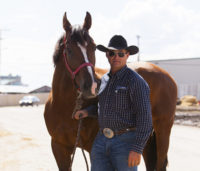
Rick Fraser, along with his daughter Kaylee, made the long road trip from Wetaskiwin, Alta., to Kentucky in the fall of 2012 to purchase new recruits for the family’s award-winning chuckwagon string. They had filled their six-horse trailer and were on their second day of travelling home when they stopped in Saskatoon to rest and check on the horses. That’s …
August 30th, 2013 Full story »

-
EHRF Research Grants: 2008-2009
What’s the shelf life of pergolide mesylate? Drs. Trish Dowling and Katherine Ball, WCVM; and Dr. Gordon McKay, U of S College of Pharmacy and Nutrition Pituitary pars intermedia dysfunction (PPID) — or equine Cushing’s disease — is a significant health problem in senior horses, affecting one in 10 horses more than 20 years of age. Affected horses commonly suffer career-limiting and …
June 05th, 2013 Full story »

-
Lohmann is students’ choice for award
Dr. Katharina Lohmann likes all aspects of her work, but what the associate professor enjoys most about her job at the Western College of Veterinary Medicine (WCVM) is teaching and being with her students. “I like that the teaching aspect changes all the time – it keeps me on my toes,” says Lohmann, a specialist in large animal medicine. …
May 24th, 2013 Full story »

-
Vital animal health projects receive funding
Two longtime research funds have directed more than $170,000 in funding to researchers at the Western College of Veterinary Medicine (WCVM) in support of vital pet and equine health research projects. The Companion Animal Health Fund (CAHF) is investing more than $67,000 in eight pet health projects while the Equine Health Research Fund (EHRF) will provide eight teams of equine …
May 22nd, 2013 Full story »

-
Equine Expo’s sophomore year bigger, better
One year after the first Saskatchewan Equine Expo took place in Saskatoon, the annual equine event has “grown up” to include an expanded trade show, more demonstrations and more activities that will appeal to people of all ages. The 2013 Saskatchewan Equine Expo, which takes place from February 15-17, is a collaborative effort involving Saskatoon Prairieland Park, Saskatchewan Horse Federation …
February 07th, 2013 Full story »

-
Scientists slowly solving laminitis mysteries
Recent research has given veterinarians a better understanding of equine laminitis, but a leading authority of the disease points out that there’s still much to be discovered about one of the horse industry’s most challenging health issues. Dr. James Belknap, a professor in Veterinary Clinical Sciences at Ohio State University and a well-known researcher in the field of equine laminitis, …
December 18th, 2012 Full story »
-
Public review draft equine code of practice
Equine Canada and the National Farm Animal Care Council (NFACC) have released Canada’s draft equine code of practice for public review. The draft code can be viewed and submissions made at the NFACC site until February 14, 2013. All stakeholders are encouraged to provide input to ensure that this code reflects a common understanding of equine care expectations and recommended …
December 03rd, 2012 Full story »

-
Vet students promote equine health to riders
Members of the Western College of Veterinary Medicine’s Equine Club are gearing up to host hundreds of young horse enthusiasts during the club’s annual 4-H and Pony Club Educational Day in late January. The day-long event, which has become a “must-attend” for many 4-H and Pony Clubs across Saskatchewan, will take place from 10 a.m. to 4 p.m. at the …
December 03rd, 2012 Full story »