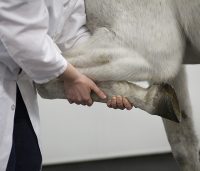
equine health

-
EHRF directs $225,000 to horse health
The Equine Health Research Fund will invest more than $225,000 in equine health research and specialized training programs at the Western College of Veterinary Medicine during the next 12 months — the largest annual amount ever awarded by the 30-year-old fund. More than $122,000 of the western Canadian-based research fund’s investment is directed toward eight new equine health research studies …
June 26th, 2007 Full story »

-
Thera Fox receives equine scholarship
Thera (Tee) Fox, a fourth-year student at the Western College of Veterinary Medicine, was the recipient of a $2,500 scholarship from the American Association of Equine Practitioners and the American Live Stock Insurance Company. Fox was the only Canadian among the eight scholarship winners for 2006. Fox, who will graduate from WCVM in May 2007, is originally from Wapella, Sask. …
April 17th, 2007 Full story »
-
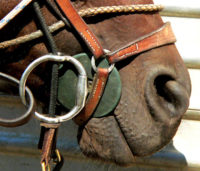
Display explores human-horse parallels
The ancient connection between horses and humans is the focus of a travelling exhibit that’s now on public display in the Western College of Veterinary Medicine’s library until Thursday, May 3. Developed by the United States National Library of Medicine, “The Horse, A Mirror of Man: Parallels in Early Human and Horse Medicine” explores the history of equine veterinary medicine …
April 17th, 2007 Full story »

-
WCVM’s major equine research projects
The Heather Ryan and L. David Dubé Veterinary Health and Research Fund has awarded $410,000 for three cutting-edge research investigations of equine endotoxemia, neonatal Rhodococcus equi pneumonia and genetic ocular disorders at the University of Saskatchewan’s Western College of Veterinary Medicine (WCVM). All submitted grants underwent a stringent review process that was conducted by three prominent Canadian veterinary scientists. The …
March 06th, 2007 Full story »
-
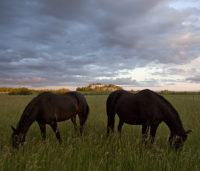
A quarter century of better health
During the mid-1970s, you could count the number of equine veterinary specialists and researchers living and working in Western Canada on the fingers of one hand. Once tractors finished replacing horse power in the 1940s, the incentive to improve horse health care had stalled in every western province. The region’s closest sources of advanced equine education and research were American …
October 19th, 2002 Full story »